

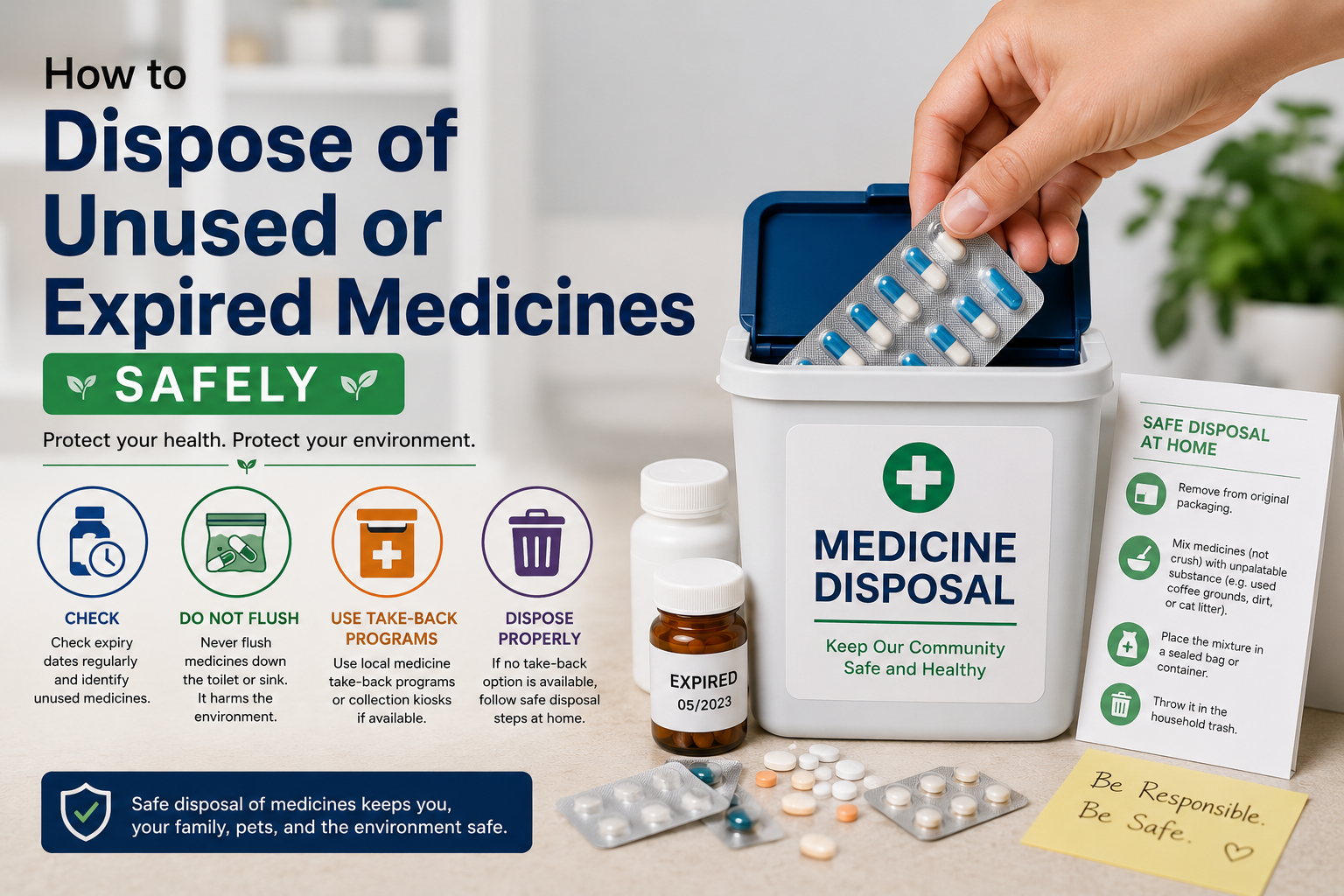
How to Dispose of Unused or Expired Medicines Safely
Unused and expired medicines can accumulate in homes over time. Keeping medication that is no longer needed may create unnecessary risks, particularly if it is accidentally taken by someone else or stored incorrectly.
Knowing how to dispose of medicines safely can help protect children, pets, other household members, and the environment.
Why Should You Dispose of Unused Medicines?
Medicines that are no longer needed should not simply be kept indefinitely. Old medicines may be forgotten, become difficult to identify, or be accidentally used for the wrong condition.
Unused medicines can also create a risk if they are accessible to children or other people who were not prescribed the medication.
If you have medication left over after completing a treatment, ask a pharmacist or healthcare professional about the appropriate disposal method.
1. Check the Expiry Date
Before deciding what to do with an old medicine, check its expiry date on the packaging.
Avoid using medication that has passed its expiry date unless a qualified healthcare professional specifically advises otherwise.
If the medicine is expired, keep it safely stored while you determine the appropriate disposal method.
2. Do Not Share Unused Prescription Medicines
If you have medicine left over from a previous treatment, do not give it to a friend or family member.
Prescription medicines are selected based on an individual’s medical condition, history, other medications, and treatment needs. A medicine that was appropriate for one person may be unsafe or inappropriate for someone else.
3. Ask a Pharmacist About Disposal
The safest option is often to ask a pharmacist or local healthcare provider about available medicine take-back or disposal programs.
Disposal procedures can vary depending on the type of medicine and local regulations.
If you are unsure what to do with a particular medicine, keep it in its original packaging and ask a qualified professional for guidance.
4. Keep Medicines Secure Until Disposal
Do not leave unwanted medicines where children, pets, or other household members can access them.
Until the medicine can be disposed of appropriately, store it securely and according to its labelled storage requirements.
This is particularly important for medicines that can cause serious harm if accidentally taken.
5. Do Not Flush Medicines Unless Specifically Instructed
Avoid flushing medicines down the toilet or pouring them into a sink unless the product instructions or local disposal guidance specifically recommends this method.
Improper disposal can potentially introduce pharmaceutical substances into wastewater and the environment.
Instead, check whether your local pharmacy, healthcare facility, or municipal authority provides a medicine collection or disposal service.
6. Do Not Throw Loose Medicines Around the Home
Avoid leaving individual tablets or capsules loose in drawers, bags, or other accessible places.
Keeping medicines in their original packaging can make them easier to identify and can help prevent accidental use.
When preparing medication for disposal, follow the instructions provided by your pharmacist, local authority, or medicine take-back program.
7. Be Careful With Special Medicines
Some medicines require additional precautions during disposal. This can include certain prescription medicines or products that may pose a greater risk if accidentally taken.
Do not assume that every medicine can be disposed of in the same way.
If the label contains specific disposal instructions, follow them. Otherwise, consult a pharmacist or healthcare professional.
8. What About Medicines That Are Still in Good Condition?
Sometimes people have unused medicines that have not expired but are no longer needed.
Do not automatically continue taking them or give them to someone else.
Contact your doctor or pharmacist to determine whether the medication should be continued, returned through an appropriate program, or disposed of safely.
Common Medicine Disposal Mistakes to Avoid
When getting rid of unused or expired medication, avoid:
- Giving prescription medicines to another person
- Using medicines after their expiry date
- Leaving unwanted medicines within children’s reach
- Pouring medicines down drains without checking disposal guidance
- Flushing medicines unless specifically instructed
- Removing important labels before you know how the medicine should be handled
- Keeping old medicines simply because you might need them someday
A Simple Medicine Disposal Checklist
Before disposing of an unwanted medicine, consider these steps:
- Check the expiry date.
- Identify the medicine and its strength.
- Read any disposal instructions on the packaging.
- Keep it safely stored until disposal.
- Contact a pharmacist or local healthcare authority for guidance.
- Use an approved medicine take-back or collection service when available.
Final Thoughts
Proper disposal of unused and expired medicines is an important part of responsible medication management. Rather than throwing medicines away without checking the appropriate method, seek guidance from a pharmacist or local healthcare authority.
Keeping medicines secure, avoiding sharing them, checking expiry dates, and using appropriate disposal programs can help reduce accidental exposure and unnecessary environmental risks.
Medical Disclaimer: This article is for general educational purposes only and does not replace professional medical or pharmaceutical advice. Medicine disposal requirements may vary by location and by product. Always follow the instructions on the medicine packaging and consult a qualified pharmacist or healthcare professional when in doubt.